Facelift in Dallas: What It Fixes That Filler and Skin Tightening Can't

Many facelift patients arrive after years of doing everything else first. They've had filler in the cheeks, Botox for the lines, a few rounds of Morpheus8, and each treatment helped for a while. Then they reach a point where the mirror still shows the same thing: jowls along the jawline, a softer neck, and a face that looks tired no matter how much they add or tighten. That is usually the point where the issue has become one of position, not volume or skin quality, and only surgery can move tissue back to where it used to be.
Why Non-Surgical Treatments Eventually Hit a Ceiling
Non-surgical treatments are valuable, and we use them every day. But each one solves a specific problem:
Filler replaces lost volume. It can't lift tissue that has descended; adding more mainly adds weight and fullness.
Botox relaxes muscles. It softens lines but does nothing for sagging.
Skin tightening such as Morpheus8 improves skin texture and firmness and can create modest tightening. It can't reposition the deeper tissues that have slid downward.
When the main concern is sagging, the non-surgical route tends to produce diminishing returns: more filler to compensate for descent, which can lead to an overfilled look, and repeated treatments with smaller improvements each time. We explain these limits in What Morpheus8 Really Does (and What It Doesn't).
What a Facelift Actually Lifts
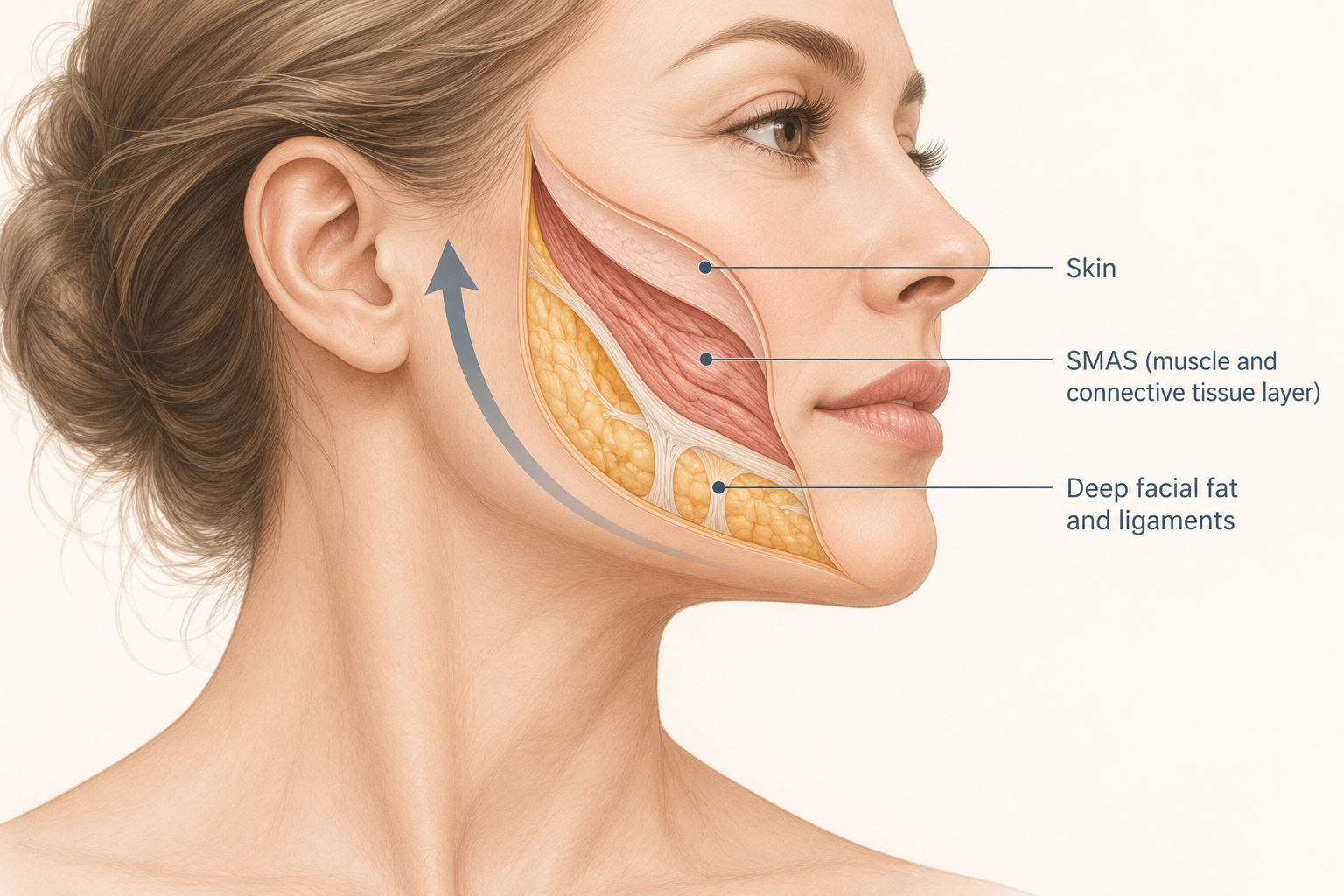
A modern facelift is not about pulling the skin tight. Pulling skin alone is what created the "windswept" look people associate with older facelifts. Today's techniques reposition the deeper layers of the face, then redrape the skin without tension.
A facelift is designed to correct:
Jowls along the jawline
Deep smile lines and marionette lines caused by descended cheek tissue
Loss of a clean jawline and cheek contour
Loose skin in the lower face
Early neck laxity, especially when combined with a neck lift
A facelift does not treat forehead lines, crow's feet, skin texture, or sun damage. Those are handled with Botox, skin treatments, brow lift, or eyelid surgery, which is why many patients pair a facelift with other procedures.
Deep Plane, SMAS, and Mini Facelifts Explained
You'll see many facelift names online. Most describe how deep the surgeon works and how much tissue is repositioned.
SMAS facelift: Tightens and repositions the SMAS, the layer of muscle and connective tissue beneath the skin. A long-established, reliable technique.
Deep plane facelift: Works beneath the SMAS and releases the ligaments that hold facial tissue down, allowing the cheek and jowl tissue to move as one unit. It can produce a more natural result in the midface and jawline and is currently the most searched facelift technique.
Mini or short-scar facelift: Uses shorter incisions for patients with early jowling and minimal neck laxity. Recovery is typically shorter, but the correction is more limited.
The best technique depends on your anatomy, the degree of laxity, and your goals. The name matters less than the surgeon's understanding of facial structure.
When Do You Need a Facelift?
There isn't a correct age. Signs that you've likely moved beyond what non-surgical treatments can do include:
Jowls that are visible at rest and in photos
Filler that makes the face look heavier instead of lifted
Lifting the skin in front of your ears with your fingertips gives you the result you want, and nothing else comes close
Your neck and jawline have lost definition in profile
You're spending more each year on maintenance for smaller improvements
Rapid weight loss is another growing reason. According to the American Society of Plastic Surgeons, 82% of member surgeons reported consultation requests related to GLP-1 weight-loss medications in 2025. When facial fat is lost quickly, skin and soft tissue may not recover, and some patients find that a facelift is the most direct correction.
How Much Does a Facelift Cost in Dallas?
Facelift pricing varies more than almost any other cosmetic procedure because the technique, the extent of surgery, and any added procedures all change the total. For reference, the American Society of Plastic Surgeons reported an average national surgeon's fee of roughly $12,000 to $19,000 for a facelift in 2024. That figure covers the surgeon's fee only. Anesthesia, the accredited surgical facility, and post-operative care are added to the total.
In Dallas, the total cost is also affected by:
Technique (mini, SMAS, or deep plane)
Whether a neck lift, brow lift, eyelid surgery, or fat transfer is added
Anesthesia type and surgical facility
The surgeon's training and experience
Recovery: What the First Few Weeks Look Like
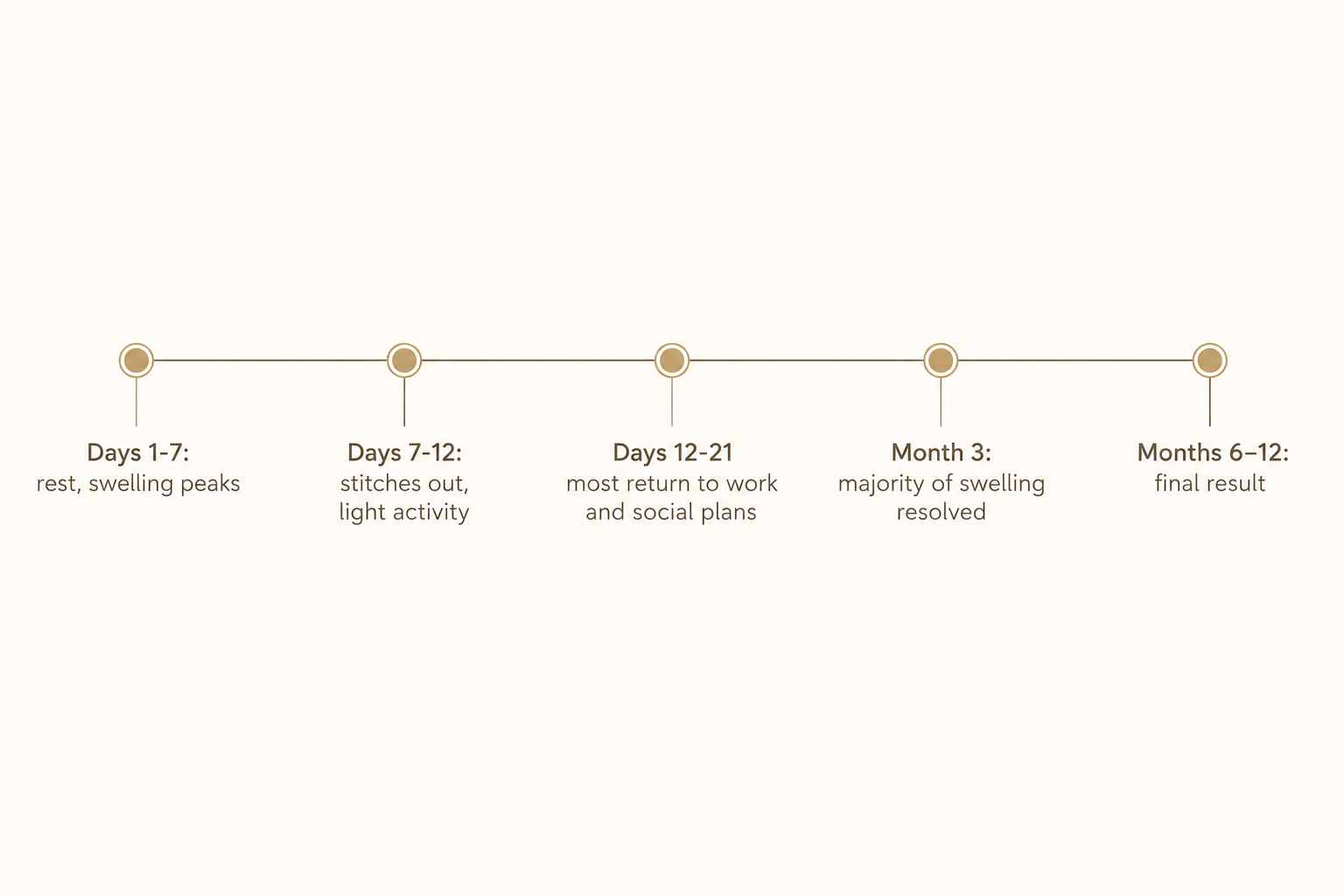
Days 1-7: Swelling and bruising peak. Rest with your head elevated. Discomfort is usually well controlled with medication.
Days 7-12: Stitches are removed and bruising fades. Light walking is encouraged.
Days 12-21: Most patients feel comfortable returning to work and social plans, sometimes with light makeup.
Weeks 4 to 6: Return to exercise as cleared.
Months 2-6: Residual swelling resolves and the result settles into its final, natural look.
A well-performed facelift typically sets the clock back meaningfully, with results that age naturally from that point for many years.
Why Surgeon Training Matters for a Facelift
A facelift is precise work around the facial nerve and the structures that control expression. Dr. Derderian is board certified by the American Board of Plastic Surgery, completed craniofacial fellowship training at Children's Hospital of Philadelphia and the University of Pennsylvania, and served on the plastic surgery faculty at UT Southwestern Medical Center for more than a decade. He has been named one of the best plastic surgeons in Dallas by D Magazine every year since 2015. That background in facial anatomy and reconstruction is the basis for results that look like you, just rested.
Frequently Asked Questions
-
No. Filler replaces volume but can't lift tissue that has descended. It can delay the need for a facelift in some patients, but once jowls and laxity are the main concern, adding filler tends to make the face look heavier rather than lifted.
-
There's no single best age. Most facelift patients are in their late 40s to 60s, but the right time depends on your degree of laxity, skin quality, and goals rather than your birth year.
-
A deep plane facelift repositions the tissue beneath the SMAS layer and releases the ligaments that hold the cheeks and jowls down. It allows the face to be lifted as a unit, which can give a natural result in the midface and jawline.
-
Results are long lasting. Your face continues to age after surgery, but from a refreshed starting point, so you will generally look younger than you would have without surgery for many years.
-
Most patients return to work and social activities in about two to three weeks. Exercise usually resumes around four to six weeks, and final results appear over several months as swelling resolves.
-
A properly performed modern facelift repositions deeper tissue and redrapes skin without tension, which avoids the pulled or windswept look. The goal is to look like a rested version of yourself.
Dr. Derderian is a renowned plastic surgery specialist in Dallas, TX. We invite you to book a consultation to find out whether a facelift, or a non-surgical plan, is the right next step for you.